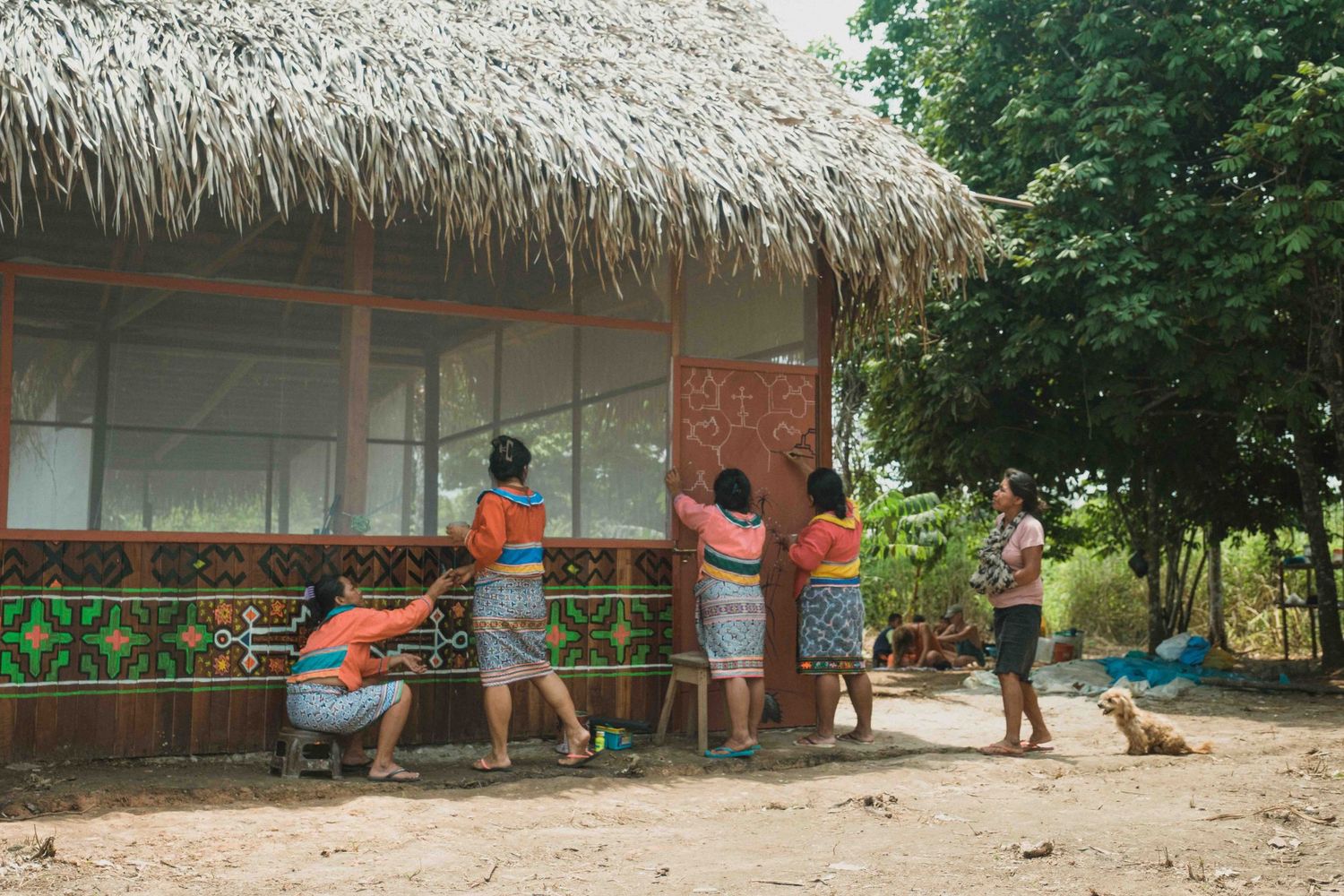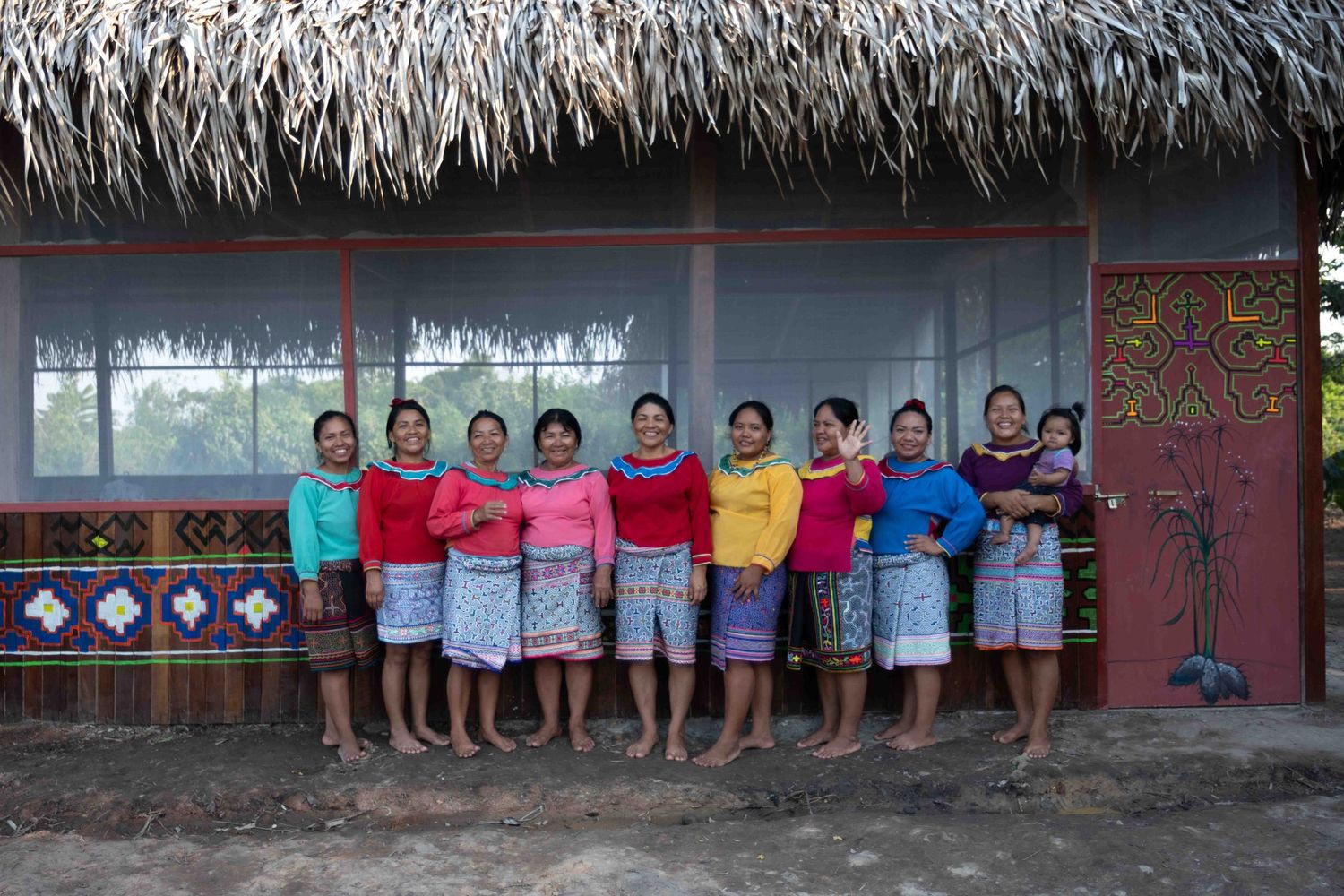
A filmmaker's stay with a Shipibo family in the Peruvian Amazon, documenting for Futuro Nativo — on ancient wisdom,
disappearing traditions,
and why the Amazon's people matter to all of us.
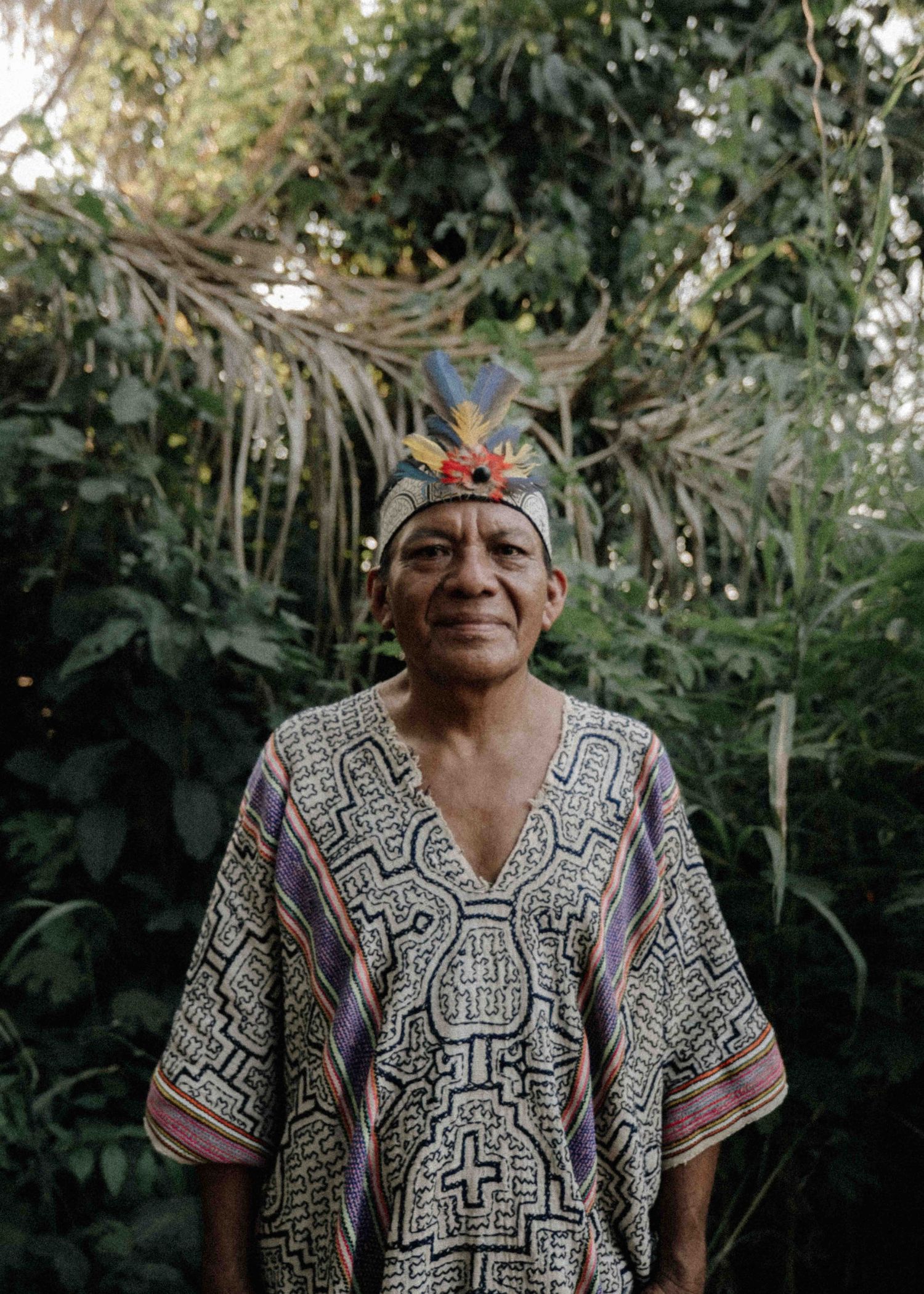
We arrived at Papa Pedro's cabin in the early morning. He couldn't walk much — he'd recently had surgery, and out here, recovering from anything is its own kind of hard work. There's no clinic down the road. No quick follow-up appointment. Just time, rest, and whatever the body can manage on its own.
He was sitting inside, waiting for us. And he wanted to talk.
I was there with Futuro Nativo, an NGO working alongside Shipibo families in the Peruvian Amazon to document their lives and help build something the community has been asking for: a center of their own. What Papa Pedro told us that evening is the reason I'm writing this post. A vision, and a warning.
He talked about the land first — how more of it disappears every year, burned or cleared to make way for people who see the forest as something to extract from, not something to belong to. Fire seasons keep getting worse. Trees and plants that took generations to grow are gone in an afternoon.
Then he talked about his own children and grandchildren. How the pull toward the cities is strong. How a "Western life" looks, from a distance, like an answer to hardship. How every young person who leaves takes a little more of the old knowledge with them — knowledge that took thousands of years to gather, and that no city will teach them.
The Shipibo trace their lineage back more than five thousand years — one of the oldest living cultures in the Amazon. Papa Pedro's fear wasn't abstract. It was that something older than almost anything else on this continent might simply run out of people to carry it forward.
His answer wasn't to hold on tighter to the past. It was to build something for the future — a community center where Shipibo families, who mostly live spread out and increasingly apart from one another, could gather again. A place to share knowledge instead of losing it. A place for the culture to keep living in public, on its own terms.
What we planted, what they're passing down
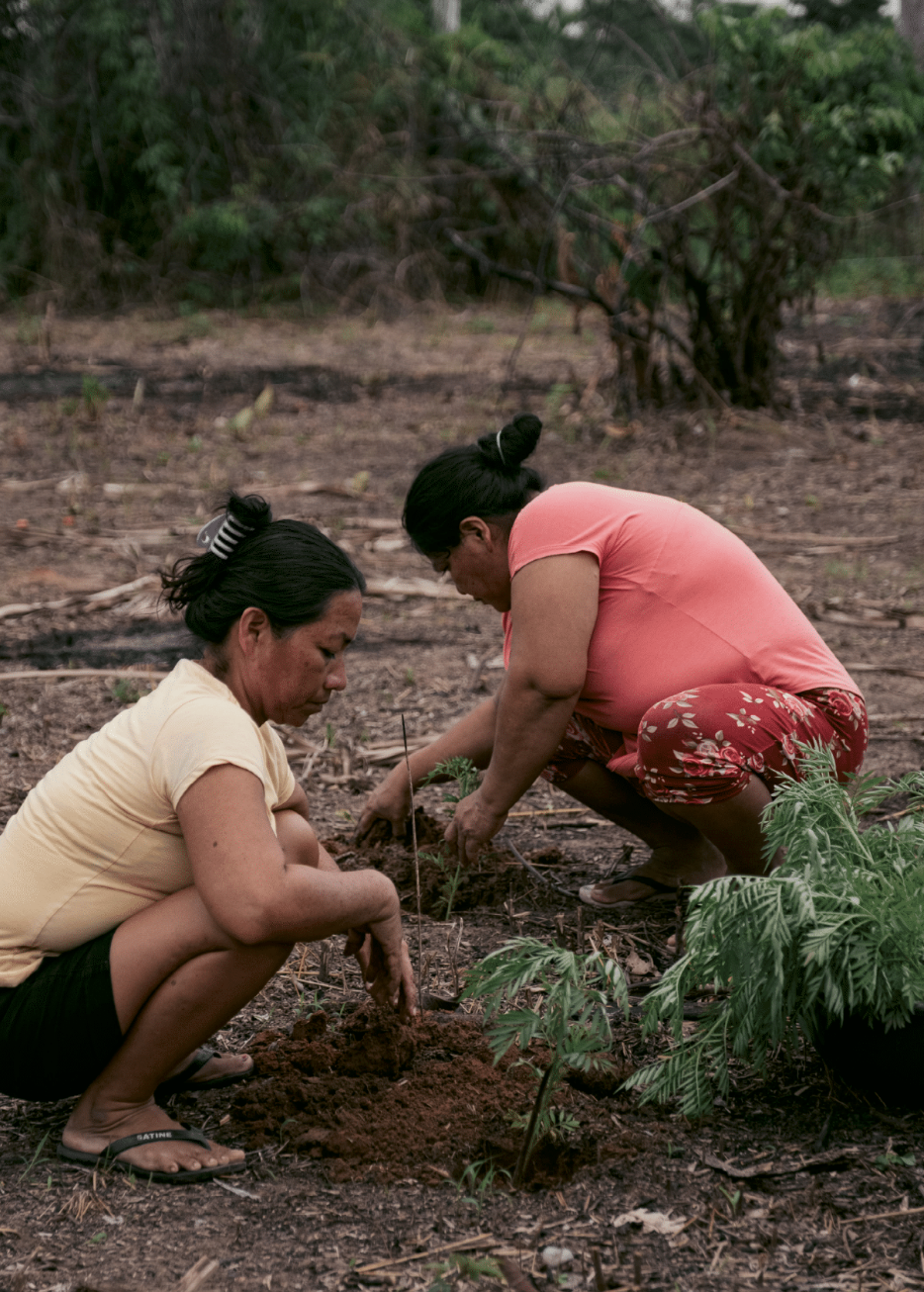
Over the days that followed, we planted more than 108 trees and plants around the land where the center will stand. It's a small number against what's lost each year to the fires — but you don't rebuild a forest with one gesture. You do it tree by tree, the same way you rebuild a culture: family by family, story by story.
Why "unify" matters more than it sounds
One thing surprised me, and I think it will surprise you too: the split happening between Shipibo families isn't only about tradition versus modern life. It's also about ayahuasca tourism. Families connected to plant-medicine ceremonies receive visitors, and with them, income. Families who aren't connected to that world receive almost nothing. The economy of attention has quietly divided a people who used to move as one.
This is part of why the community center matters. It isn't built around ceremony or tourism. It's built around gathering — a shared space where families who've been pulled apart by circumstance can come back together, trade knowledge, and be strong as one people again.
What it actually looks like to live there
I want to be honest about something, because I think it matters more than any single fact I could share: the family I stayed with has no running water, no toilets, no supermarket, no access to medical treatment beyond what the forest and each other can provide. We slept on thin mattresses. Tarantulas wandered in at night. The mosquitoes were beyond anything I could have prepared for.
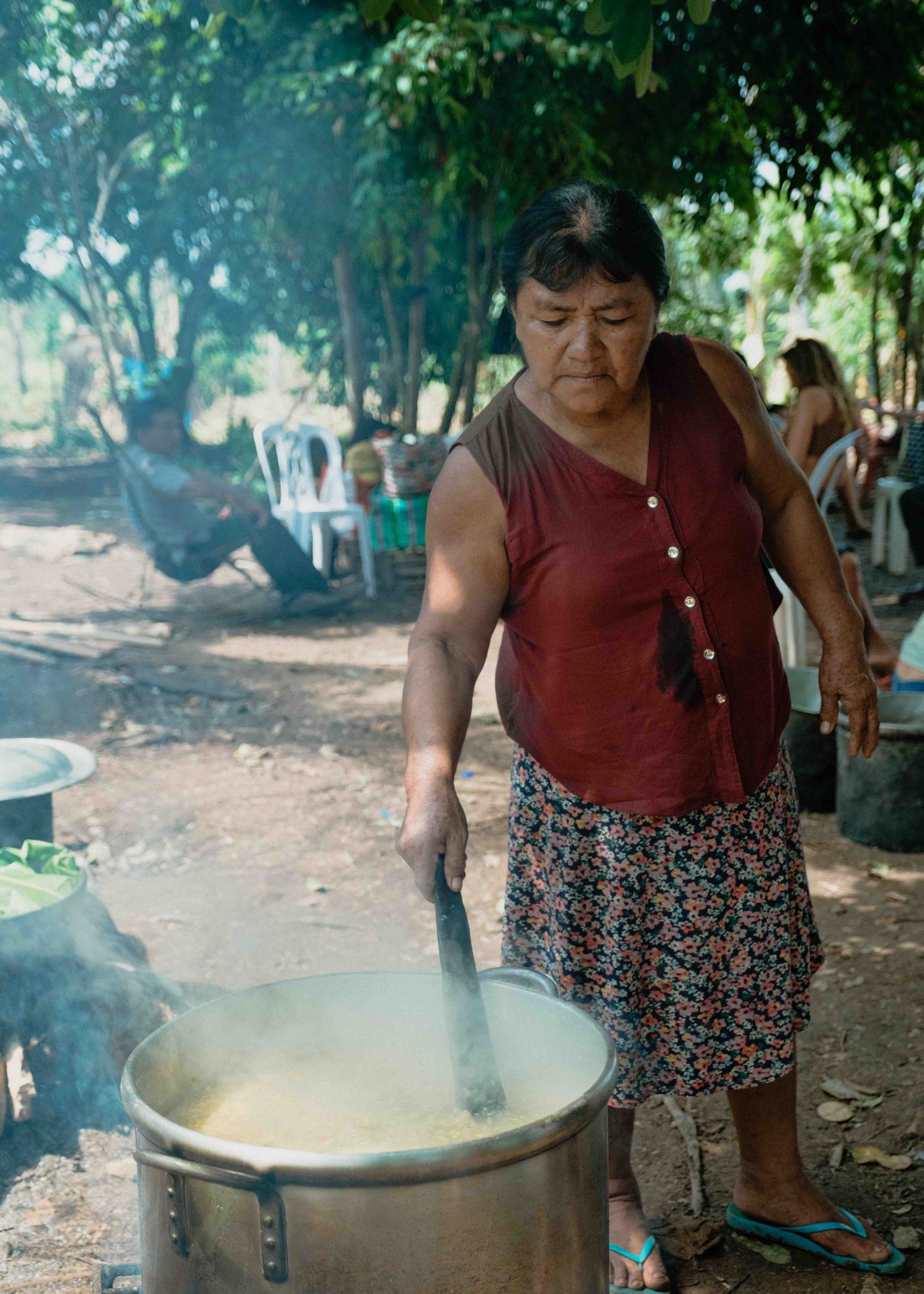
And still — I have never in my life felt as welcomed by strangers as I did in that family's home. They treated us as their own. Not politely, not performatively — as family, immediately, without condition.
The reality underneath the illusion
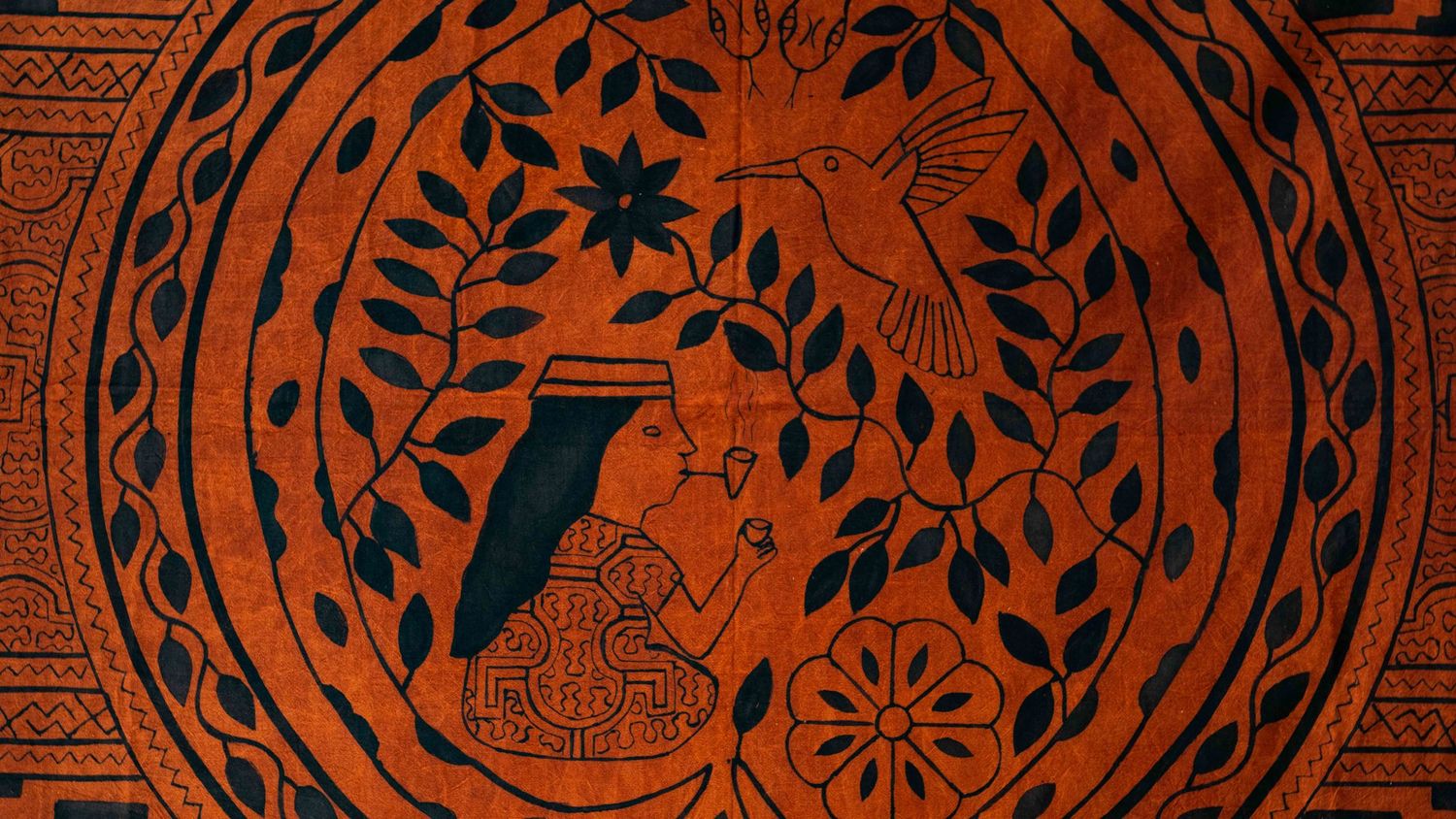
Papa Pedro also shared the Shipibo cosmovision with us — the anaconda, the great serpent that moves through ayahuasca visions, and the cosmos, the stars they've read for longer than most nations have existed. I've worked with plant medicine for years, but hearing this cosmovision at its source, from people who've carried it since before anyone thought to write it down, changed something in how I understood it.
We spend so much energy trying to escape reality — through screens, through busyness, through distance from each other. But reality, when you actually arrive at it, looks nothing like what we're running from. It looks like a family, a shared meal, a body that needs rest and safety and love, same as any other body on this earth. Our cultures may look impossibly different from the outside. Our values, underneath, are rooted in the exact same ground.
Why this is bigger than one family
The Amazon isn't just a forest. It's often called the heart of the world for a reason — it regulates rainfall and carbon across the entire planet, not just South America. The people who live inside it and protect it, who know which plant heals which wound and which pattern belongs to which vision, are not separate from that ecological work. They are that ecological work. When a family like Papa Pedro's loses its land, its knowledge, or its next generation, the planet loses something too. Not symbolically. Actually.
That's why a community center, on one small piece of land in the Peruvian Amazon, is not a small thing.